Brain Entrainment Therapy in Rome, GA
What Brain Entrainment Therapy Actually Does to Your Brain
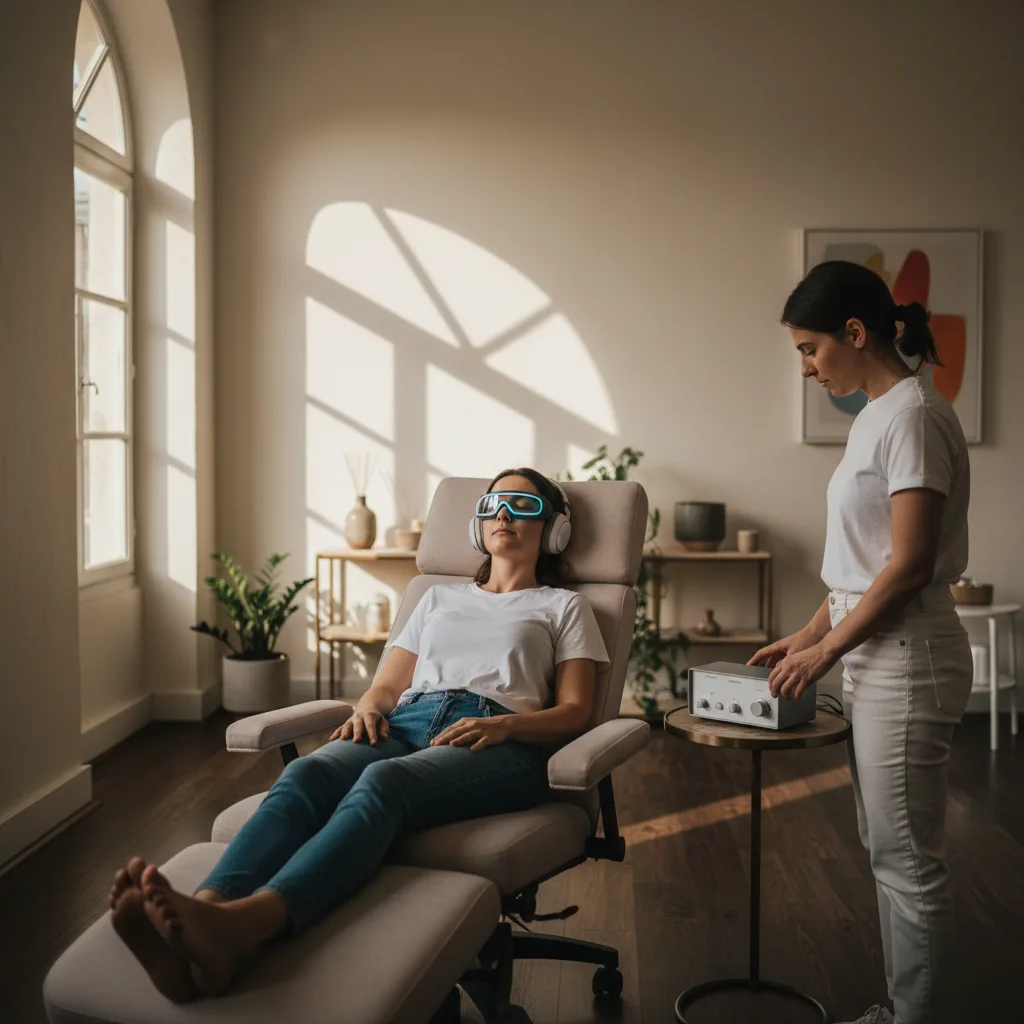
Your brain runs on electrical patterns. Every thought, every feeling, every moment of focus or rest depends on brainwaves firing at specific speeds. When those patterns get stuck or disorganized, you feel it. Brain fog. Poor sleep. Anxiety that won't quit. Brain entrainment therapy uses light and sound pulses to guide your brainwaves back into healthier rhythms.
Here's the simple version. We expose your brain to rhythmic audio and visual signals at a set frequency. Your brain naturally wants to match that frequency. Scientists call this the "frequency following response," and it's been studied for decades. A 2025 review published in Frontiers in Human Neuroscience found that auditory and visual stimulation can measurably shift brainwave activity toward targeted states like deep relaxation or alert focus [1].
That's not magic. It's biology.
Think of it like tuning a guitar. The strings are already there, they're just slightly off. The pulses we deliver during a session give your brain a reference tone to match. Over time, your brain gets better at finding those patterns on its own. We see this every week with people right here in Rome who come in scattered and leave feeling clear.
What Happens During a Session
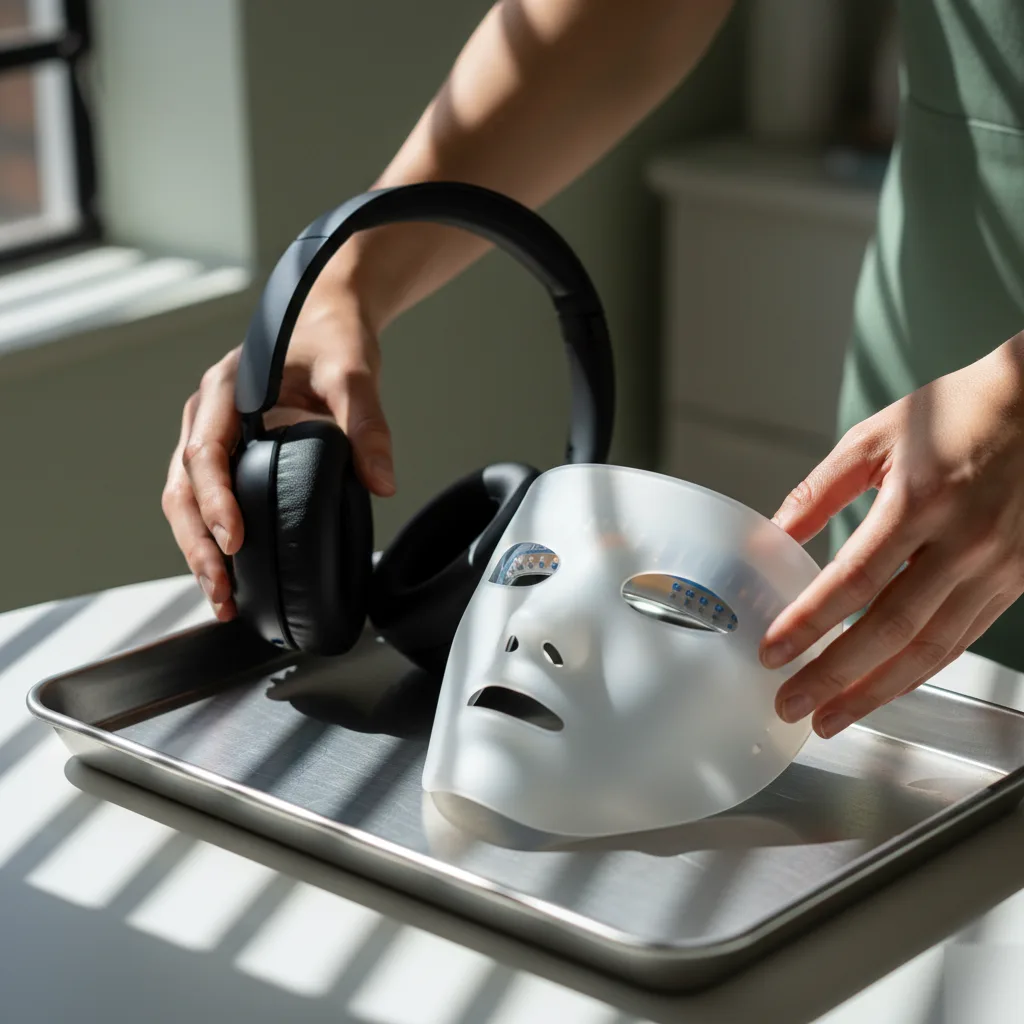
You sit in a comfortable chair, put on a headset, and close your eyes. The session delivers carefully timed light flickers through the visor and sound beats through the headphones. Most sessions last between 30–60 minutes. No needles, no medication, nothing invasive.
People describe the experience differently, but common responses include:
- A deep sense of calm within the first few minutes
- Feeling mentally "reset" afterward, like waking from a great nap
- Better focus that carries into the next day
- Falling asleep faster that same night
The effects tend to build. One session can feel nice. A consistent series of sessions is where real change happens. We've had folks from the West Rome area come in barely sleeping four hours a night, then within a few weeks they're getting six or seven solid hours without medication.
Many people who walk through our door have never heard of brain entrainment therapy before someone mentioned it or they stumbled across it online. But once they feel that first session, the questions usually answer themselves.
Conditions That Respond Well to Guided Brainwave Sessions
You'd be surprised how many people walk into our Rome office thinking brain entrainment therapy is only for one thing. Maybe they heard it helps with sleep. Or stress. The reality is much broader than that.
We see folks every week who've been dealing with brain fog that just won't lift. They can't focus at work, they forget why they walked into a room, they feel mentally sluggish by 2 p.m. That's one of the fastest things to respond to guided brainwave sessions. Most people notice sharper thinking within just a few visits.
Here are the conditions where we see the strongest results:
- Chronic stress and tension that won't ease up no matter what you try
- Poor sleep quality, including trouble falling asleep or staying asleep
- Persistent brain fog and difficulty concentrating
- Headaches and migraines tied to nervous system overload
- Anxiety-driven fatigue that leaves you drained before noon
Athletes from around the Rome area come in for peak performance brain training. Their bodies are fine. It's their mental game that needs sharpening. Brain entrainment therapy helps them lock in focus and recover faster between competitions.
Most people sitting in our chairs near West Rome aren't dealing with just one of these issues. Stress feeds poor sleep. Poor sleep creates brain fog. Brain fog makes everything harder, which causes more stress. It's a loop. The light and sound protocols we use interrupt that cycle at the neurological level, giving your brain a chance to reset instead of just spinning.
According to the International Society for Neurofeedback and Research, brainwave modulation techniques show measurable changes in EEG patterns across a wide range of stress-related and cognitive conditions [2]. So even if your situation feels unusual, there's a good chance your brain will respond.
We don't guess. We listen to what you're experiencing and match the right session protocol to your specific situation right here in Rome.
Ready to give your brain a chance to reset? Book your first brain entrainment session in Rome today.
Schedule OnlineWhy Professional Sessions Outperform App-Based Entrainment
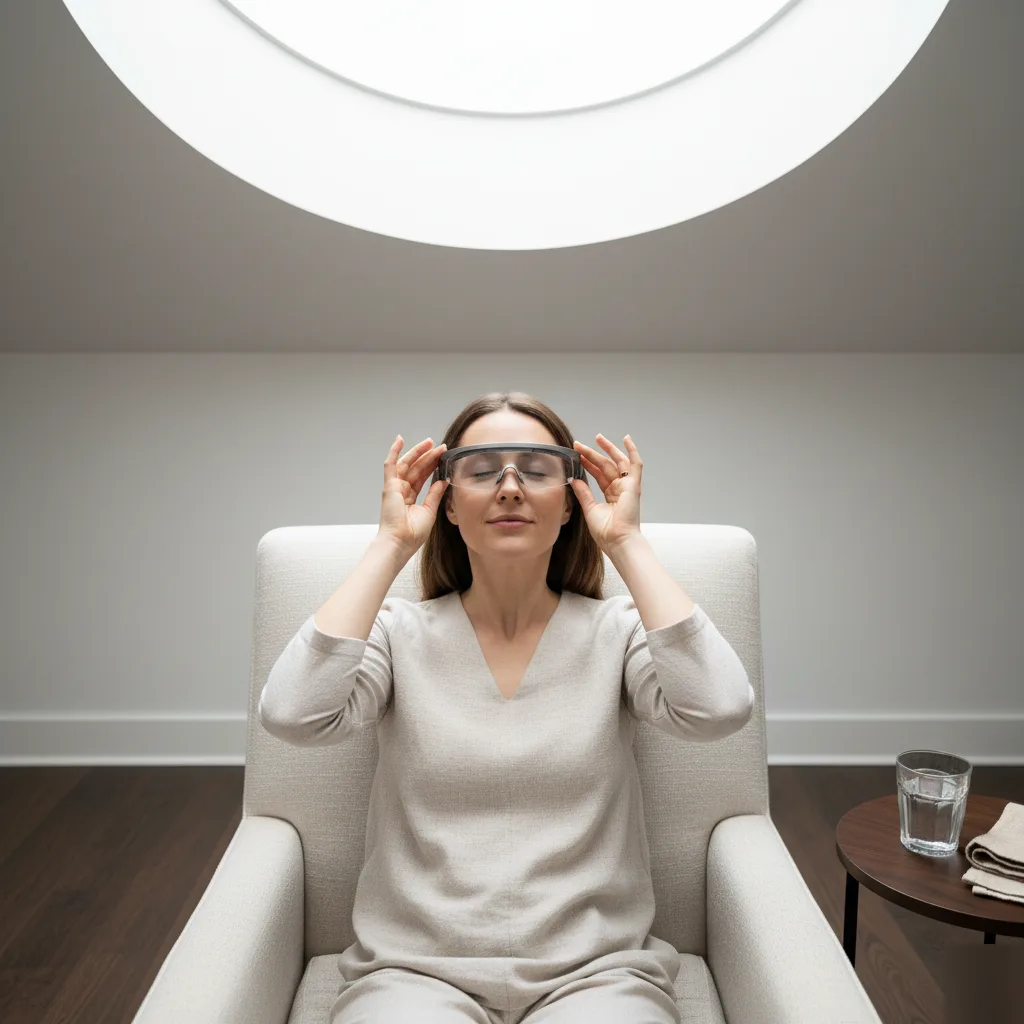
You've probably seen the apps. Maybe you've even tried one. A ten-minute audio track with some pulsing tones, a promise to "rewire your brain" while you sit on the couch. Those apps aren't useless. But there's a gap between what a phone speaker can do and what happens during a real brain entrainment therapy session in a clinical setting.
We hear this almost every week from folks here in Rome: "I downloaded something and it didn't really do anything." That doesn't surprise us one bit.
Here's why professional sessions are different. The equipment matters. Our sessions use calibrated light and sound technology that delivers precise frequency patterns to your brain. A phone app pushing generic audio through earbuds can't match that level of input. The frequencies need to be accurate, the timing has to be exact, and the delivery has to engage both visual and auditory pathways at once. Most apps only cover one of those.
But the bigger issue is guidance. When you come in for a session, we're not just pressing play. We talk through what you're dealing with, sleep trouble, brain fog, stress that won't quit, then we select the right protocol for your situation. That's something an algorithm can't replicate.
There are a few other reasons professional sessions pull ahead:
- Sessions happen in a controlled environment with zero distractions, not your living room with the TV on
- We adjust frequency programs based on how you respond over multiple visits
- You get the benefit of combining brain entrainment therapy with other services we offer like cold laser therapy or spinal traction therapy
- Our team monitors your progress and can shift your plan when something changes
People near West Rome tell us they feel a noticeable difference after their first in-office session compared to weeks of app use. That's not a knock on technology. It's just the reality of working with someone who does this every day versus a one-size-fits-all download.
Not sure if you've outgrown the DIY approach? Talk to a holistic medicine practitioner to learn more.
What to Expect During Your First Session on Shorter Ave
You walk in. We talk. That's really how it starts.
Before any brain entrainment therapy begins, we sit down and go over what's been going on with you. Maybe you can't sleep. Maybe your brain feels foggy by 2 p.m. every day. Maybe stress has gotten so loud you can't think straight. We hear all of it, ask a few questions about your health history, and figure out the right approach for your first session right here in Rome.
The Session Itself
Once we've got a clear picture, here's how things go:
- You settle into a comfortable chair in a quiet room. No rushing.
- We fit you with a headset that delivers specific light and sound patterns.
- The session runs for about 20 minutes while you simply relax with your eyes closed.
- We check in with you afterward to see how you felt during the process.
- We talk about what comes next and whether follow-up sessions make sense for your goals.
People tell us they feel calmer before they even stand up. Some say it's like that feeling right before you fall asleep, where everything just quiets down. Others notice their shoulders drop for the first time in weeks.
There's nothing painful about it. No needles, no medication, no weird side effects.
We see a lot of first-timers on Shorter Ave who are nervous because they've never tried anything like this. Most of our patients in Rome had zero experience with brain entrainment therapy before walking through our door. And the people who are most skeptical tend to be the ones who notice the biggest shift after that first visit.
One session gives you a taste. It's the consistency over time that changes how your brain handles stress, sleep, and focus on a daily basis. We'll be straight with you about that from the start.
Have questions before you come in? Call our Rome, GA office and we'll walk you through it.
Have questions before you come in? Call our Rome office and we'll walk you through it.
☎ (706) 290-3229Who Should Know Before Booking: Safety and Honest Expectations
Most people can use brain entrainment therapy without any issues at all. But not everyone, and we'd rather you know that upfront.
If you have a history of seizures or epilepsy, this isn't the right fit. The rhythmic light and sound patterns can trigger episodes in people with photosensitive conditions. We ask about this before every session. No exceptions. If you're unsure about your history, talk to your doctor first. We'll be here when you're ready.
A few other things worth knowing before you book:
- People with active ear infections should wait until they've healed, since the audio component can cause discomfort
- If you have a pacemaker or other implanted device, check with your cardiologist before starting
- Kids under 12 should only participate with a parent present and after a quick conversation with our team
- Anyone currently adjusting psychiatric medications should let us know so we can coordinate timing
Now for honest expectations. Brain entrainment therapy isn't a magic switch. Some folks here in Rome walk out of their first session feeling noticeably calmer and more focused. Others need three or four visits before things click. We see both responses regularly, and neither one means it's working better or worse for you.
You might feel a little drowsy after your first session. That's normal. Your brain just did something new. Drink water, take it easy for an hour, and you'll feel fine. A handful of people near the Broad Street area have told us they slept better that very night. Others didn't notice sleep changes for a couple weeks.
We're not going to promise you results we can't deliver. What we will tell you is that the research supports what we see in our office every day. Auditory and photic stimulation can measurably shift brainwave activity.
So if you're healthy and curious, there's very little downside to trying a session. But if anything on that list above applies to you, let's have a conversation first.
Citations
[1] Frontiers in Digital Health. "Auditory and Visual Stimulation and Brainwave Entrainment." https://www.frontiersin.org/journals/digital-health/articles/10.3389/fdgth.2025.1552396/full
[2] International Society for Neurofeedback and Research. "What Is Neurofeedback?" https://isnr.org/what-is-neurofeedback
Frequently Asked Questions
Common questions about brain entrainment therapy from our Rome, GA patients.
Ready to Quiet the Noise in Rome, GA?
Whether it's stress, poor sleep, or brain fog that won't lift, brain entrainment therapy gives your brain a chance to reset. Book your session at Douglas Family & Animal Chiropractic and feel the difference for yourself.


Contact Us
(706) 290-3229
(706) 487-3222
610 Shorter Ave NW
SUITE 9,
Rome, GA 30165
Copyright 2025, Douglas Family Chiropractic.
All Rights Reserved.
Powered By: