Symptoms That Suggest Your Performance Horse Should Get Evaluated
You know your horse—that goes without saying. What most people don't realize is how often you are the first to know when a horse has a problem, if you're paying attention. You've noticed that your barrel horse doesn't like leading on the left at speed around the turn. Your reining horse isn't stopping as clean as he used to. It doesn't have to be a training issue.
It could be pain, a training issue, or both.
Horses can't speak human, they don't talk back and they can't tell you that their backs are in pain. Instead, they express their problems in many different ways. Rome riders who notice the signs and take care of it early find it much easier to solve their performance horse's issue than they would waiting longer.
Symptoms of Horses that Need Equine Chiropractic Care
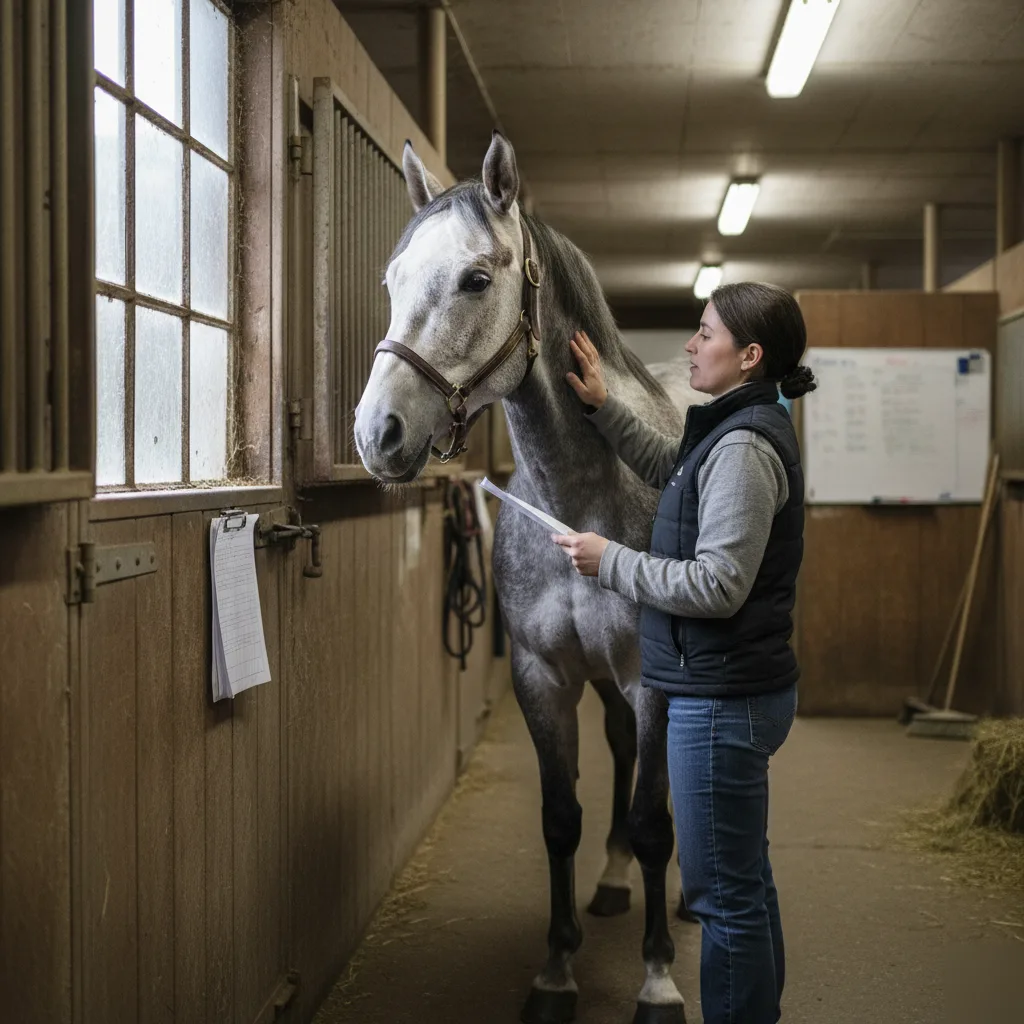
Some of the signs are very obvious, but there are also others which can be more subtle and could be misinterpreted. These are the common signs we see in horses which could benefit from a performance horse chiropractic evaluation:
- Failing to maintain lead on the correct lead or switching lead unprompted when riding collected.
- Uneven gait, usually shorter on one side and often seen at trot.
- Tightening ears when saddling up or tightening when cinching up.
- Head tossing or not liking the bit, which the horse never did before.
- Lesser quality of forward momentum or less energy under saddle.
Riders we work with at the Floyd County Fairgrounds in Rome have been calling to say that they "feel" that the horse seems 'stuck' (a good term for it really) during the course of their ride. When a joint is 'restricted' in the spine or pelvis, creating the feeling of being "stuck." If you can't get your horse to move through properly, they will never be able to move freely through their entire body.
Most people wouldn't immediately think of a spinal problem when a horse is exhibiting behavioral change, such as becoming tight when cinched, kicking in the crossties, not standing for the blacksmith, and the like. But the pain in the thoracic spine or sacroiliac can be enough for a horse to become cinchy, to kick, or resist the farrier. And we see these horses regularly. The horses are often well-trained, or just behave exceptionally well with their riders and handlers, but they have these behavioral issues.
So when the horse is acting off for the rider, vet, or farrier, and there is no lameness, this is another very good case for chiropractic adjustment. It's not unusual for a lameness-free horse to still have restricted joints that limit his potential. Being IVCA Certified tells you exactly where to check and what subtle changes in your horse's gait might signal to us that the horse needs a performance horse chiropractic evaluation. It's often far easier to make small adjustments to a horse before any larger compensations become chronic.
What are the Qualifications for Performing Equine Adjustments in Georgia?
Not everyone who calls themselves an equine chiropractor has the training to back it up. That's a real problem in Georgia, and it's something horse owners in Rome need to understand before letting anyone put hands on their animal.
IVCA certification represents the completion of an advanced postgraduate program in animal chiropractic. That program consists of equine anatomy, biomechanics, neurology, and hundreds of hours of supervised adjusting. It's not a weekend seminar. The International Veterinary Chiropractic Association sets high standards because that work demands it. According to the IVCA, practitioners are required to earn continuing education credits to maintain active status, which means if a practitioner cannot produce up-to-date credentials, that is your first warning sign. [1] This is what we recommend you ask any potential practitioner prior to having them handle your horse: Are you IVCA or AVCA certified in animal chiropractic? Do you have a current chiropractic or veterinary license in the state of Georgia? How many performance horses do you adjust each month? Will you communicate with my veterinarian regarding your observations? We receive inquiries like this often from barn owners around the Berry College region and throughout Rome, and we appreciate these questions. You should be suspicious. Your horse's spine is not an issue to treat lightly. Credentials on paper are only one part of the picture; experience is even more important. A practitioner who adjusts performance horses every day recognizes how the anatomy of a barrel racing horse deteriorates in contrast to a dressage horse, and can palpate with clarity the lumbar area of a cutting horse following the course of an entire competition season. Academic theory alone will not identify minute restrictions that reveal themselves when horses are performing work. However, credentials without practical ability are mere paper; and ability without proper credentials is a liability. You should demand both. And your horse should have the benefit of both.
Ask the right questions before anyone puts hands on your horse. Book with an IVCA-certified team that works with Rome-area performance horses.
Book Your Appointment
Performance-Horse-Specific Chiropractic Stressors Chiropractors Correct
A barrel horse doesn't shift in the same manner as a dressage horse, and a cutting horse doesn't exert force on its spine in the same manner as a jumper. Every discipline forces energy through distinct joints, through different muscle groupings, through separate vertebral segments., it is absolutely imperative that a performance horse chiropractor understand the work your horse performs before touching its spine. We work with equines located throughout Rome of almost any discipline, and these are the issues we see most frequently based on a horse's occupation:
- Barrel racing and pole bending: Sharp turns at high speeds force the thoracolumbar junction to compress, locking up the pelvis on one side. This type of equine will almost always display asymmetry throughout the hindquarters.
- Reining and cutting: Abrupt stops and sideways movements force the lumbosacral joint to compress and force the poll and upper cervical vertebrae to absorb impact as well, since these horses constantly manipulate their head and neck.
- Dressage and hunter/jumper: Collection demands constant engagement through the back. We find mid-thoracic restrictions and sacroiliac dysfunction more than anything else in these horses.
- Trail and ranch horses: Numerous hours spent riding over rough terrain produce mild restrictions that accumulate with time. Many owners with horses on the Etowah River trails bring us animals that are "just a little off," but have no idea why.
The majority of the time it matches the discipline. All of the time.
So why does it matter to you? Because a general change that doesn't account for how your horse performs is not going to fix the root cause of the problem. A reining horse with a locked T14-T15 segment loses stopping power. A jumper that has sacroiliac restrictions can't push off the hindquarters evenly in front of the jump.
Having an IVCA certification means we've studied these patterns, and not just in general animal chiropractic, but in how we've studied it in horses specifically. When we come to your farm in Rome, we've already had the patterns from your horse's discipline in mind as we perform a thorough adjustment. That changes how we look for a problem, how we assess range of motion, and what results you can expect to see after the first visit.
Do you have a horse and aren't sure if its discipline is causing the symptoms that we can help with? Call us!
Get performance horse chiropractic care in Rome.
Not sure if your horse's discipline is behind the symptoms? Call our Rome team — we'll talk through what you're seeing under saddle.
☎ (706) 290-3229
What to Expect for a Farm Visit Chiropractic Session

Our mobile set-up means we bring everything we need to your barn, paddock, or training facility here in Rome. We don't have to trailer your horse, which means it is not as likely to be spooked in an area not-familiar to him before we even start. This, we find, matters more than you might imagine because a stressed horse is more challenging to adjust and takes longer to respond.
Here is what to expect after we arrive:
- Observation in movement. We ask you to walk and trot your horse on a flat surface. This allows us to view how they move. Gait is an indicator of many of our findings without ever touching your horse.
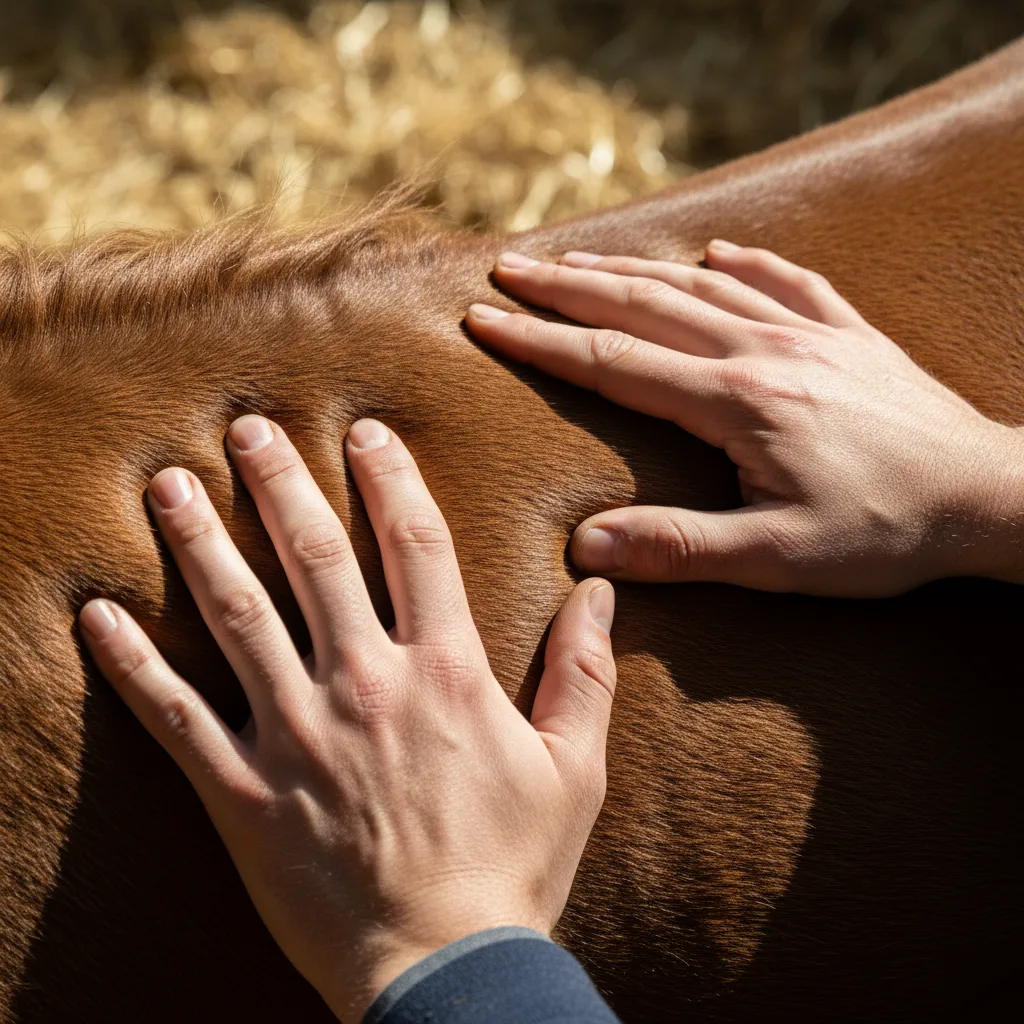
- Palpation at rest. We work down your horse's spine, pelvis, and major joints looking for heat, muscle guarding, limited range, and asymmetry.
- The adjustment. The adjustment consists of quick, specific thrusts to one particular joint. Every horse takes to this differently. Most will settle into the treatment almost immediately, with some licking and chewing at the same moment they are adjusted. Some may take a few minutes after.
- Post-adjustment. We reassess your horse's range after every adjustment to the joint has reacted.
- Homework. We recommend simple stretching or ground exercises to help the horse retain its range longer between visits.
Overall, we can complete the whole session in 30-45 minutes. We've treated farms out by Shannon, downtown Rome, anywhere really, and always bring everything necessary in our truck.
Most report the difference in their horse by 24-48 hours. They're better at bending. There's less tension at the poll. They'll willingly take a particular lead after a while. But the best work takes time and continues to build over a series of sessions.
Our rule of thumb is simple: avoid aggressive lunge work or demanding arena exercise for 24 hours post-adjustment. The horse requires a day to acclimate to the realignment. A relaxed turnout is acceptable; a rigorous barrel pattern, absolutely not.
Rest assured, we hold IVCA certification. This signifies our completion of specialized post-graduate education in animal chiropractic, ensuring the horse receives the caliber of treatment offered to any equine athlete stepping through our Rome door.
Maintenance Intervals for Competition Horses in Active Training
This is the mistake most horse owners make. They phone us only after a failure occurs: a refusal at a jump, a sudden head toss, or a lead change that suddenly disappears. The horses that shine at competitions in Rome are those on a maintenance program before the issues arise.
Think of your horse as an athlete. Athletes don't sit out an entire season waiting for an injury to appear to see a doctor, and the same logic applies here.
The frequency of visits depends on several factors: intensity of training, discipline, age, and the time the horse takes to recover between events. We generally suggest an appointment every three or four weeks for the average competition horse in active training. A horse participating regularly in a high-paced season of barrel racing or roping will probably need one every two or three weeks. The dressage horse in lighter competitions might go for five or six weeks between visits.
A Regular Maintenance Plan Usually Includes
- The initial visit will include a motion analysis to establish a baseline.
- The subsequent appointments will be scheduled in conjunction with your horse's competition or training schedule.
- Follow-up appointments will be made to assess how the horse is reacting to the treatments in the days following the appointment.
- The appointments will be modified depending on the time of year, more appointments prior to the show season, and more time between them during rest periods.
- There will also be specific things we ask owners to look for while the horse is between appointments.
Horses who are on a regular maintenance program do show marked improvements in the way they move. Often the rider sees it first: they notice that transitions are more even, the horse is more cooperative, less resistive. In addition, the horses are healthier for longer in their show seasons. In fact, in several barns in the vicinity of Etowah, trainers will have five or six horses that rotate in on a monthly visit schedule. That keeps them all at their best all the time.
Many people don't think beyond spinal maintenance. But we are looking at more than the back. We monitor the horse all the way down the chain from head to hip and everything in between: pelvis, poll, ribs, sacroiliac. There are compensations from one to the other. By staying on top of it, we can keep these small adjustments from growing into more serious problems before they have a chance to cost the horse an important competition or weeks out of training.
Ready to have your horse established on a maintenance program for the upcoming season? Give us a call and we'll discuss your options.
Keep your competition horse moving freely with regular care.