

Posture Correction in Rome, GA
Signs Your Posture Needs a Professional Look
Quick Summary:
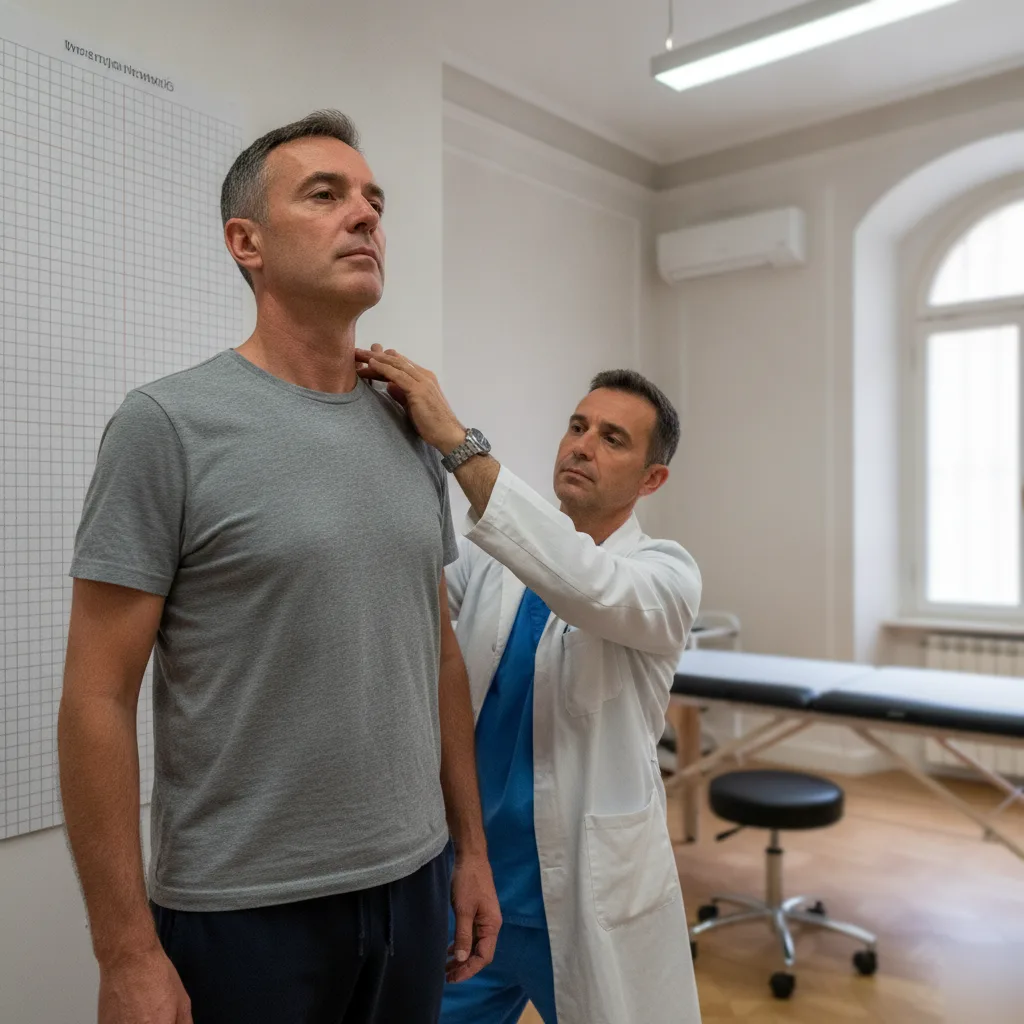
Rounded shoulders, a forward-leaning head, or one hip sitting higher than the other are signs your posture has shifted out of alignment. If stretching and reminders to 'sit up straight' aren't fixing it, the issue is likely structural and needs a professional look.
Here's something we see every week. Someone comes in convinced they just need to work on their posture, and it turns out the problem is in their spine. It's not a habit. It's a misalignment. So how do you tell the difference?
Start with the mirror test. Stand relaxed and look at your shoulders. Is one higher than the other? Does your head tilt forward like you're always reading a phone? Check your hips too; uneven pant hems or a belt that always twists to one side is a clue. Then there's the feel test. Does your neck ache by mid-afternoon? Does your lower back tighten up after sitting for an hour at a desk in a Rome office building? That's not just a poor habit. That's your spine compensating. Here are the signs to look for:
- Rounded shoulders or a hunched upper back that doesn't improve with reminders
- Forward head posture, chin jutting ahead of your shoulders
- One shoulder or hip visibly higher than the other
- Headaches that start at the base of your skull by afternoon
- Uneven shoe wear, one side wearing down faster
When someone shows up with two or three of these, a spinal issue often drives it. Not always. Sometimes it really is just a habit, and a stronger core fixes it. But if you've tried the stretches and the yoga app and nothing's changing, your body is telling you something else is going on underneath.
How Chiropractic Posture Correction Works

Here's what happens. We don't just look at where it hurts. We look at how you stand and sit. We compare your shoulders to your hips. We see where your spine has started compensating for years of habits. Posture doesn't slip overnight, so fixing it isn't a one-and-done deal either.
The first visit is about figuring out the pattern. Are your shoulders rounding forward from a desk job? Is one hip sitting higher than the other? We check spinal alignment, watch how you move, and talk through your daily routine. Your desk, truck seat, and phone habits all matter. Here's how the process works:
- We assess your posture standing and seated, checking shoulder and hip alignment.
- We identify which spinal segments are restricted or shifted out of place.
- We use spinal manipulation and chiropractic adjustments to restore movement to those areas.
- We may add rehabilitation exercises so the muscles around your spine learn to hold the new position.
- We recheck your progress over follow-up visits and adjust the plan as your body responds.
That's the part people miss. An adjustment can move a bone back where it belongs, but muscles have memory. If we don't retrain them with rehabilitation exercises, your body just drifts right back to the old posture within a few weeks. That's why we build a plan instead of a single visit.
Some patients pair this with massage therapy too. Tight muscles can pull your spine out of line just as easily as a joint restriction. Loosening those muscles up first often makes the adjustment hold better and longer.
Not sure if your posture problem is muscle, bone, or just habit? That's exactly what the first visit sorts out.
Muscle, bone, or just habit? Book your first visit and we'll sort out what's really driving your posture.
Book Your AppointmentPosture Correction for Kids and Adults Looks Different
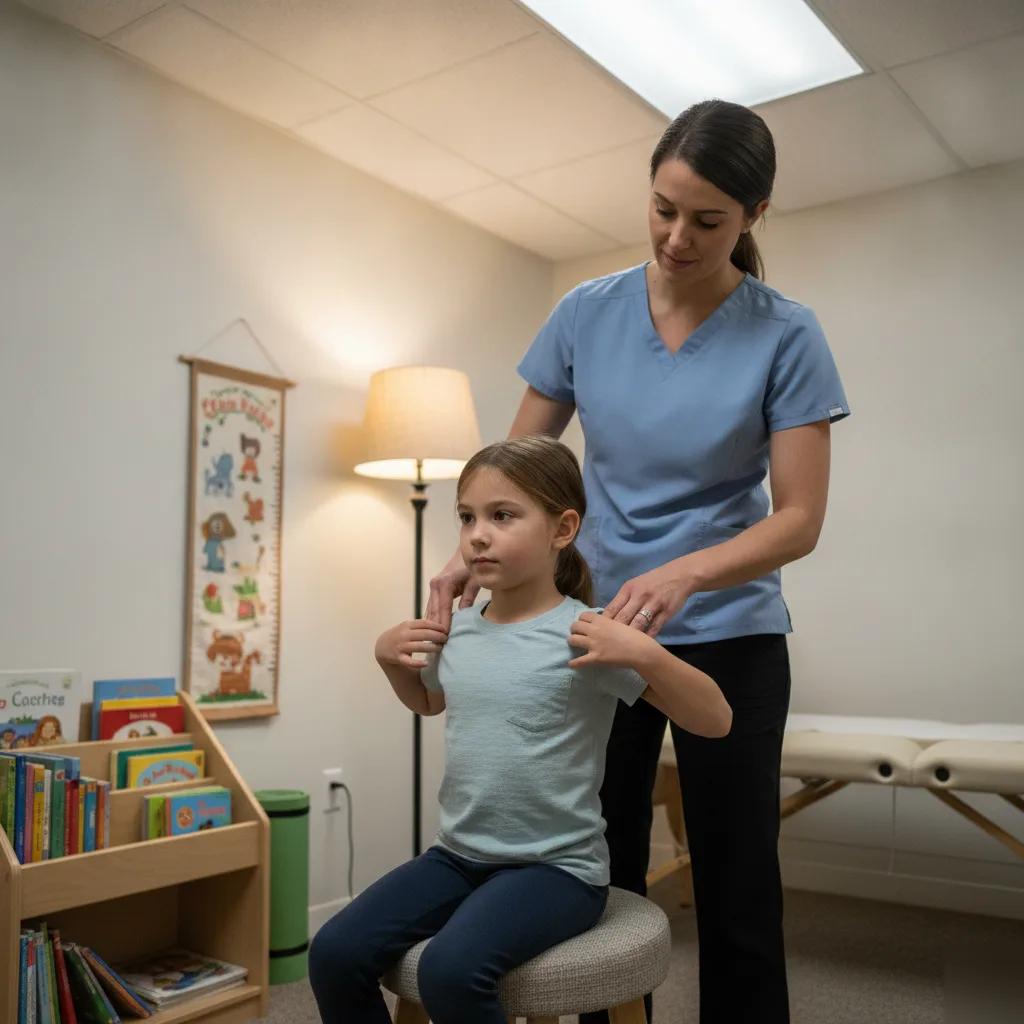
A kid's spine and an adult's spine are not the same project. Kids are still growing. Posture habits formed now, like hunching over a tablet or carrying a heavy backpack to school, can shape how their spine develops for years. Catching it early is a lot easier than fixing it later. Dr. Douglas holds certification through the International Chiropractic Pediatric Association. [1] That training shapes how care gets adjusted for smaller, still-developing bodies.
Adults are a different story. By the time most adults come in, the posture problem has been building for a decade or more. Desk jobs, driving, phone scrolling, and old injuries that never fully healed contribute. The muscles have adapted around the bad pattern. Correction often takes more layered work, combining adjustments with rehabilitation exercises to retrain the muscles that got used to slouching.
So what does this look like in practice? For a kid, we're watching growth patterns. We catch small shifts before they become big ones. For an adult, we're often untangling years of compensation. One joint restriction hides behind another. The adult's shoulder pain may trace back to a hip that's been out of alignment for years.
We're not treating a generic diagnosis here. We're treating your spine, at your age, with your history. That's the whole point.
And here's something we tell every parent who asks: this isn't about forcing a kid to sit up straight through willpower. Posture is mostly unconscious. You correct the mechanics, and the sitting-up-straight part tends to follow on its own.
Catching it early is easier than fixing it later. Call our Rome office to schedule a posture check for you or your child.
☎ (706) 290-3229When Posture Correction Isn't the Right First Step
Not everybody who walks in with rounded shoulders needs a posture correction plan. Sometimes the real problem is something else entirely, and starting there first just wastes your time.
If you had a fall or a car accident recently and you're dealing with sharp pain, that's not a posture issue yet. That's an injury that needs to be looked at first. The same goes for numbness or tingling running down an arm or leg. We often see someone try to fix their posture at home for weeks before realizing the tingling was a pinched nerve the whole time. That's a different conversation. It usually needs its own exam before anyone talks about posture.
There are also folks who just started noticing a little slouch after sitting at a desk for a few months. Not sure if that counts as a real problem? That's common. Sometimes a few weeks of stretching and standing up more during the day handles it fine on its own. You don't need an exam for that. Here are examples of what needs a closer look and what doesn't:
- Sudden sharp back or neck pain after a fall, lift, or accident
- Numbness, tingling, or weakness running down an arm or leg
- Fever or unexplained weight loss along with back pain
- Mild slouching you noticed just this week with no pain at all
- Posture changes tied to a pregnancy that's still in its early weeks with no discomfort yet
And if you're already under care for something else, like an active herniated disc, or you're recovering from whiplash, that needs to stabilize first. Posture work builds on a foundation. It doesn't replace one.
We'd rather tell you straight than have you start somewhere that won't help.
What Drives the Cost of Posture Correction Care
Let's talk about money for a second, because you're wondering. Posture correction isn't a one-price-fits-all service. What you pay depends on what's going on in your spine and how long it took to get that way.
A few things push the cost up or down. Someone with mild rounding in the shoulders from a desk job needs less work than someone with years of untreated pelvic tilt or scoliosis-related curvature. The number of visits matters too. Posture that took ten years to develop doesn't reverse in one adjustment. Here are the main things that affect the cost:
- How long the postural issue has been present
- Whether it's tied to another problem like sciatica or a pinched nerve
- Whether rehabilitation exercises or spinal traction therapy are added to the plan
- How many visits it takes to see lasting change
- Whether massage therapy is layered in to loosen tight muscles first
Here's something to ask any provider before you book. Ask what's included. Are we talking about adjustments alone, or does the plan include rehabilitation exercises you do at home too? Ask how they measure progress. Ask if they reassess after a set number of visits instead of just booking you indefinitely.
We build every posture correction plan around what your body needs, not a set package. Some patients need corrective chiropractic care paired with massage therapy to get the muscles to cooperate with the adjustments. Others just need consistent spinal manipulation over a few weeks. That's a conversation we have at your first visit, not something we guess over the phone.
Citations
[1] International Chiropractic Pediatric Association. https://icpa4kids.com/training/pediatric-certification/program-details/
Frequently Asked Questions
Common questions about posture correction from our Rome, GA patients.
Fix Slouching Before It Becomes Chronic Pain in Rome, GA.
If stretches and reminders to sit up straight haven't changed anything, the problem is likely structural. Our team at Douglas Family & Animal Chiropractic checks how you stand, sit, and move, then builds a plan that pairs adjustments with rehabilitation exercises so your posture holds.



Contact Us
(706) 290-3229
(706) 487-3222
610 Shorter Ave NW
SUITE 9,
Rome, GA 30165
Copyright 2025, Douglas Family Chiropractic.
All Rights Reserved.
Powered By: