

What Are the 'Big 3' Exercises for Back Pain? McGill Method Explained in Rome, GA
How to Perform Each Exercise With Correct Form
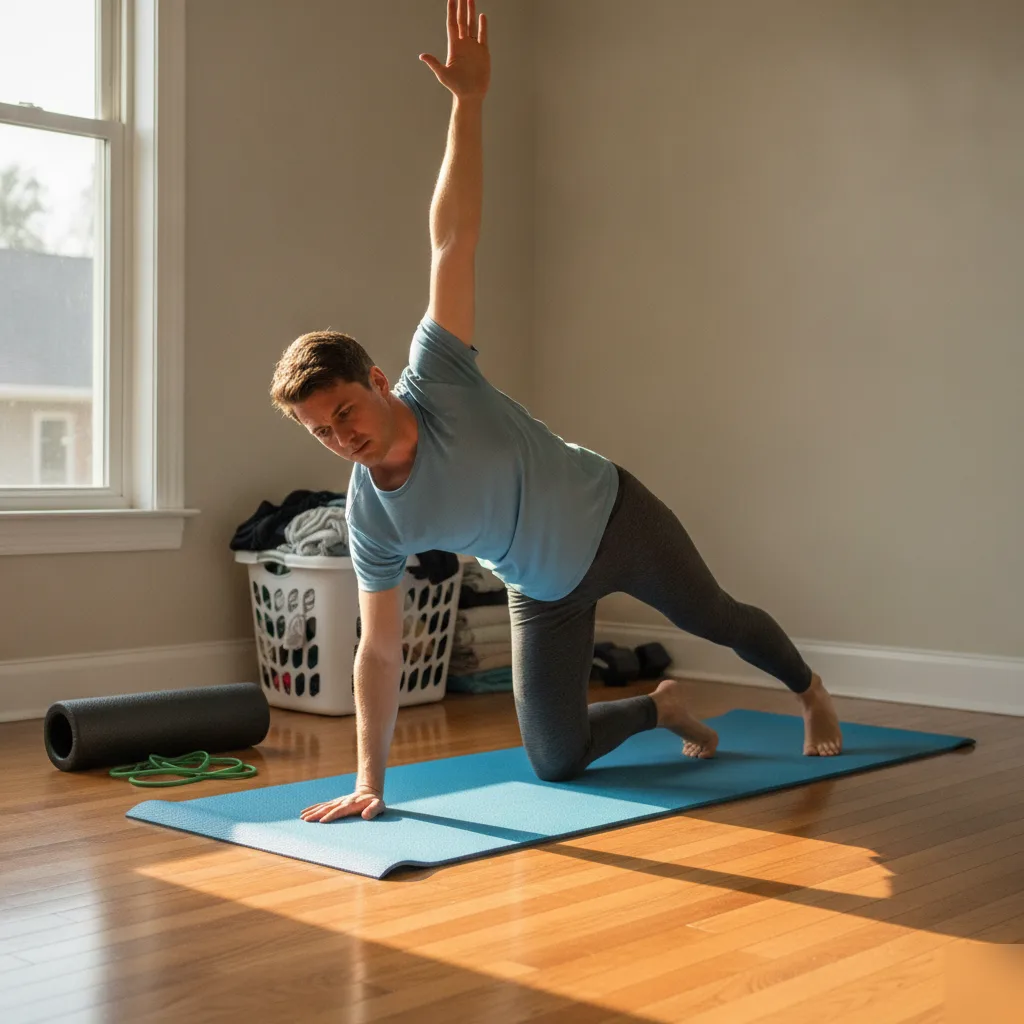
Form really beats reps here. Mess up the McGill Big 3, and you're just wasting time. Or worse, you might even hurt your back more. We've seen so many people in Rome grind through these moves for weeks with zero progress, and it almost always comes down to one thing: sloppy technique that just isn't getting them anywhere. We can fix that.
The Modified Curl-Up
Forget sit-ups. They just stress your discs, more than they help. Dr. Stuart McGill's research proves it. Here's how to do this one the right way:
- Lie on your back. Bend one knee, keep the other leg straight.
- Slide your hands under your lower back for support.
- Lift your head and shoulders just an inch or two off the floor.
- Keep your neck stiff, like it's locked to your ribcage.
- Hold for a few seconds, then lower slowly.
No movement in your low back. None. If it flattens or arches at all, that means you're pushing past the point where the exercise is helping, and you're going too far. Ten reps, that's enough. And just breathe normally, don't hold it.
The Side Plank
This builds those side-of-the-trunk muscles. Most people skip them. Start on your knees if a full side plank is too much. That's totally fine, no shame in it.
- Lie on your side, prop up on your forearm, elbow under your shoulder.
- Lift your hips so your body forms a straight line.
- Keep your shoulders stacked, don't let your top hip roll forward.
- Hold for 10 seconds to start, work up slowly.
Feel a pinch? Or a strain in your low back? Stop immediately. That means your hips have dropped, or you're twisting somewhere, which shows you're not holding the proper alignment and putting strain on your back. Switch sides, then repeat.
Bird Dog
Bird dog looks simple, but most people rush it. Get on hands and knees, find that neutral spine position, no sagging, no rounding, that's key. Reach one arm straight forward as you extend the opposite leg straight back, keeping everything super controlled. Hold for a few seconds. Your hips shouldn't rock side to side, and your low back definitely shouldn't dip. Bring your arm and leg back slowly, then switch sides.
We had a patient right here in Rome, a warehouse worker. He'd battled nagging low back pain for months. He told me he finally felt a real difference when he slowed down the bird dog, and focused on keeping his hips from tilting. That's the entire trick. Speed just kills the form on this one. More than any other in the Big 3.
What's the big takeaway? Control beats raw effort every single time with these three moves. We see this mistake nonstop, people trying to just power through, instead of focusing on the precision that builds lasting strength. Your spine doesn't need more movement. It needs stability. Especially when everything around it is moving. The Journal of Physical Therapy Science found that there were significant improvements in pain, functional disability, and active back extension range of motion in patients who performed McGill stabilization exercises following six weeks of exercises [1].
Not sure if you're doing these right? Or maybe your pain hasn't shifted after trying them. That usually means something else is at play, and it's not just a matter of doing more reps or holding longer. We can take a proper look at your spine. Your movement patterns tell us a lot. Things these exercises alone can't.
Why the Same Exercise Can Help One Back and Hurt Another

We see this happen often, right here in our Rome office. Two people come in. Same complaint: low back pain, worse after sitting too long. We give them a quick movement screen. One person feels instant relief when they arch their back. The other? A sharp pinch in that exact same spot, which tells us their spine is reacting completely differently despite the similar symptoms they're experiencing. Same problem, totally opposite reaction. See why a generic exercise list can mess things up?
Your spine isn't like anyone else's. Some backs hate bending forward — we call that flexion-intolerant. Think touching your toes, or hunching at a desk. It just irritates discs and nerves. Other backs can't stand arching backward — that's extension-intolerant. Often it's tight facet joints. Or a stressed lower back curve. Then there's rotation. Twisting to grab something from the backseat, or swinging a golf club, that can stir up real pain. Dr. Stuart McGill, a spine biomechanics researcher, built his whole system around figuring out which specific movement pattern applies to your back before you ever pick an exercise to try.
That's why the McGill Big 3 — the curl-up, side plank, and bird dog — help so many people. They build stability. They don't force your spine into painful positions. But even these still need little tweaks. Your body is unique, after all.
Signs Your Back Might Be Reacting to the Wrong Movement
- Pain gets worse after sitting for a long time, but feels better when you stand and gently arch backward
- Pain flares up when you arch or lean back, but eases when you round forward slightly
- Sharp catches happen only when you twist, like reaching for a seatbelt
- One side of your back feels tighter or angrier than the other during the same exercise
Spot any of these? That's not just a symptom to ignore, it's incredibly useful information for understanding what your spine needs. That's really useful information.
Doing the wrong version of even a "safe" exercise can quietly put strain on your spine in the exact direction that is already causing you problems, which is counterproductive. You might feel fine doing it, then stiffness hits the next morning. You'd never connect the two, right?
This is exactly why a proper assessment counts. Before you build any routine around the Big 3. A trained eye can spot your specific movement pattern in just minutes, which is something truly difficult to catch on your own when you're just looking in a mirror. If you're not sure what category your back falls into, that's a conversation worth having. Don't keep guessing at home.
Not sure which movement pattern fits your back? Book a movement assessment in Rome and let's find out before you make it worse.
Book Your AppointmentCommon Mistakes That Reduce Results

The McGill Big 3? They look so simple. That's why so many people mess them up. We see this mistake often at our Rome clinic. Someone watches a quick video. Does the moves for a week. Feels nothing. Quits. But the problem usually isn't the exercise itself, it's about how it's being done and the lack of proper form and understanding.
Here are the usual mistakes. We see them when folks bring us their home routines to review after they haven't seen the results they were hoping for:
- Rushing the reps. These aren't for speed. Each hold needs to be slow. And controlled. Usually 8-10 seconds. Fast reps just make it a core workout. Not a spine-bracing drill, which is what we want.
- Arching or flattening the low back during the curl-up. Your spine needs to stay neutral. Natural. The whole time. If your lower back presses down, or arches up, the exercise loses its point entirely.
- Letting the hips sag during the side plank. If your hip drops, those muscles you're working? They're off the hook. Support should form one straight line. From your shoulder, through your hip, to your feet.
- Overextending the leg on bird dog. Lift your leg too high? You're rotating your pelvis. Straining your low back. Not protecting it. Small, controlled moves are better. Forget the big, dramatic stretch.
- Doing the exercises through pain. Muscle fatigue is fine. But sharp pain? Numbness? Tingling down your leg? No. That's your body yelling at you. Stop. Get it checked.
And here's something we notice a lot in Rome, truly. Especially with folks who have desk jobs downtown. Or those who drive hours between here and Cartersville or Rockmart. They try to cram the Big 3 into five rushed minutes, often right between meetings, which completely defeats the purpose of precise spine work. So form goes out the window. Breathing gets shallow. It just becomes a box to check. Not real spine training. Slow it down. Ten focused minutes is better. Always beats twenty rushed ones.
Another issue we see often: skipping the warm-up walk. A proper program usually starts there. The Big 3 aren't for cold muscles. Not right after bed. Or a long drive. Your spine needs gentle movement first. Just a few minutes. Skip that, and you're much more likely to feel stiff or even sore afterward, and that can really discourage people from sticking with their routine.
We also see people doing too much too fast. Someone feels good after two weeks and decides to double their reps or even add ankle weights to the bird dog, but that totally goes against the method's core principle. That's backwards thinking. The McGill Method is about slow tolerance building. Not maxing out early. More isn't the goal here. Consistency is everything.
One more mistake: doing these exercises without a real assessment first. The Big 3 aren't for everyone, not exactly. Someone with a herniated disc needs a very different starting point than someone who just has general stiffness from sitting all day, and that's an important distinction. This is where a proper evaluation helps. It makes a real difference. And it's a big part of our back pain treatment visits. If your home routine isn't working after a few honest weeks, with good form, that means it's time for us to take a look. Don't just push harder on your own.
Explore our comprehensive back pain care plans near Rome, Georgia.
Your home routine isn't working? Call our Rome clinic and let's take a proper look before you push harder on your own.
☎ (706) 290-3229Citations
[1] Journal of Physical Therapy Science. "Effects of McGill Stabilization Exercises and Conventional Physiotherapy on Pain, Functional Disability, and Active Back Extension in Patients with Chronic Nonspecific Low Back Pain." https://pmc.ncbi.nlm.nih.gov/articles/PMC5908986/
Frequently Asked Questions
Common questions about the McGill Big 3 exercises from our Rome, GA patients.
Ready to Build a Back Routine That Actually Works in Rome, GA?
The McGill Big 3 can transform your back — but only with proper form and the right starting point. Our team at Douglas Family & Animal Chiropractic will assess your movement pattern and make sure you're doing these exercises in the way that helps your spine, not loads it. Same-day appointments available.



Contact Us
(706) 290-3229
(706) 487-3222
610 Shorter Ave NW
SUITE 9,
Rome, GA 30165
Copyright 2025, Douglas Family Chiropractic.
All Rights Reserved.
Powered By: