What Percentage of Back Pain Cases Actually Require Surgery? A Rome Guide, GA
Most Back Pain Cases Do Not End in Surgery

Back pain got you down here in Rome? Wondering if surgery is in your future? Here's the quick truth. Most folks don't need it. We get asked "What Percentage of Back Pain Cases Require Surgery" all the time in our office, and the real numbers often surprise our patients. This research, by the way, holds pretty steady.
Only a small share of people with low-back pain go on to need surgery. According to the American Association of Neurological Surgeons, pain improves without surgery in approximately 90% of cases [1]. Surgery is generally considered when conservative care has not helped or when there are serious or worsening neurologic symptoms, such as progressive weakness or bowel/bladder dysfunction.
- Usually, back pain is just a muscle strain or a cranky joint. Not a big structural problem.
- Your body is a healing machine. It fixes disc and muscle boo-boos all by itself.
- Chiropractic adjustments and specific rehab moves? They get rid of most pain.
- Surgery? That's for scary "red-flag" stuff, not your average ache.
So why does it feel like everyone's going under the knife? Fear plays a big role. Back pain is no joke, so people jump to worst-case scenarios. And frankly, there's a ton of bad info out there online.
We see this happen daily, right here in Rome. Someone Googles their symptoms for days, then walks in sure they need surgery. We go over their story. Turns out? It's just a common disc problem or a pinched nerve. Things that love spinal manipulation and rehab exercises. You know, the good stuff. That first visit usually brings a real sense of relief.
Here's a true story we've seen many times. A landscaper, working hard around Rome's older homes (those uneven yards, ugh), strained his lower back with some mulch bags. He thought he was done for, heading for surgery. But after a few weeks of chiropractic adjustments and spinal traction therapy, his pain eased up. He was back to work. No operation required.
Surgery is for very specific stuff. Severe nerve compression that affects bladder control, worsening muscle weakness, maybe a fracture. Those situations are serious. They happen. But they're a tiny fraction compared to the daily back pain that walks through doors like ours.
Here's the part people miss.
Ignoring back pain, or just waiting it out, can make things worse. Not "surgery worse"... just more stubborn. Early care really counts. Getting checked out helps you see where you stand. Are you in that small group needing surgical care? Or the much larger group that just needs some help getting better?
Not sure what's going on with your pain? That's what we do. Our whole approach is built to answer that question for you. We prefer looking at your actual situation. Forget the internet guesses.
Ready to feel your best? Check out our complete menu of chiropractic care options today in Rome.
How Doctors Decide If Surgery Is Needed
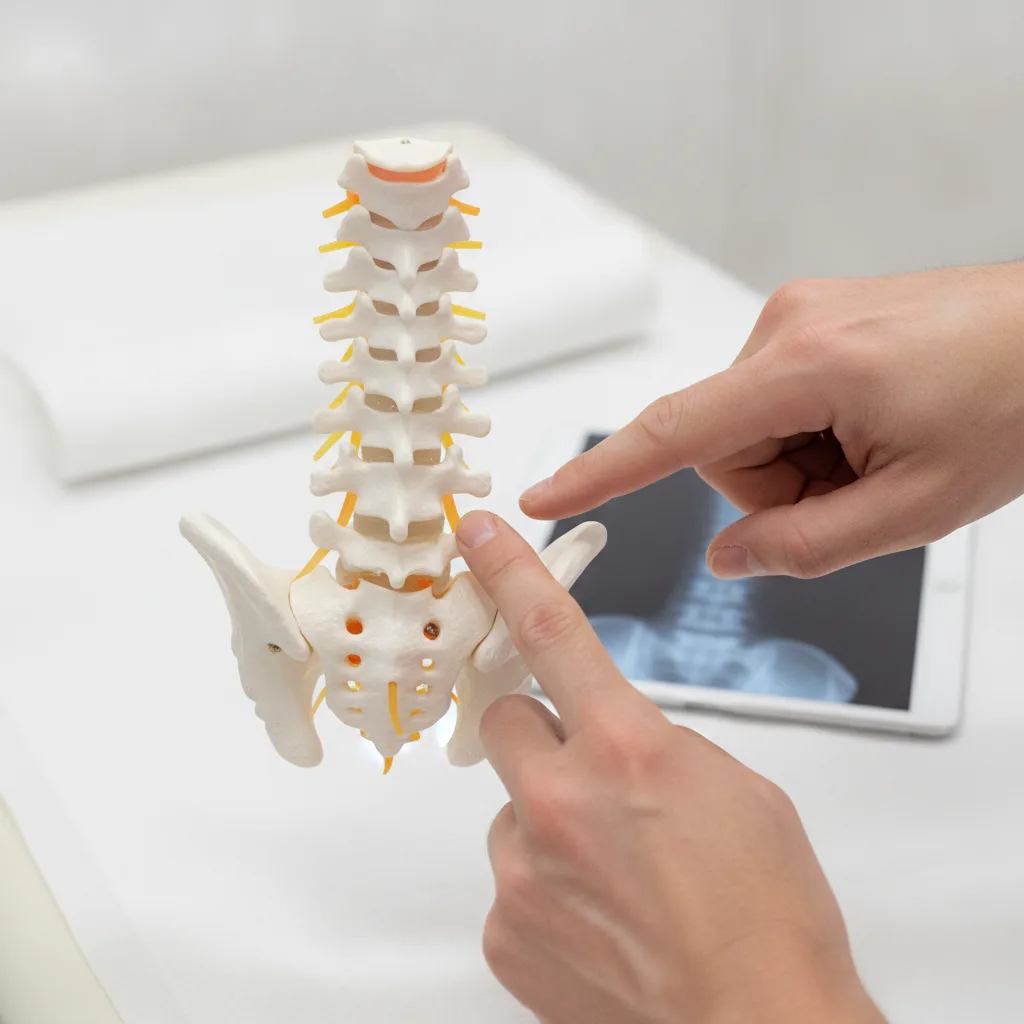
Doctors don't just glance at an MRI and say 'Scalpel!' They take in the whole story. Your scan might show a bulging disc, but that doesn't automatically mean it's the culprit for your pain. We know this for a fact. Loads of people have disc problems on imaging, no pain at all. So doctors dig in. Way before they even whisper 'operating room'.
Here's how most doctors approach back pain surgery:
- They'll get your pain history. How long has it been bothering you? Weeks? Months? That makes a difference.
- They test your reflexes. Check strength. See how your legs and feet feel.
- Bladder or bowel changes? They'll ask about it. That's a huge warning sign, and needs fast action.
- They stack your actual symptoms against what the images show.
- Non-surgical care comes first. Usually six to twelve weeks of it.
- They watch you. Getting better? Still stuck? Feeling worse?
This is why we always tell our patients in Rome: be patient. Even when the pain is just awful. Most back pain really does get better. With some time, and the right care. Chiropractic adjustments, spinal traction therapy, and rehabilitation exercises — they all help your body heal on its own schedule. It usually works out.
Doctors also watch for "red flag" symptoms. These are big signs. They mean something more serious is up. Numbness in the groin. Suddenly weak legs. Losing bladder control. These things push doctors to move fast. No red flags? Most doctors will pump the brakes. They'll try conservative care first.
We've chatted with many folks around Rome who heard "surgery is an option" from their doctor. Not "a requirement." That word choice is huge, by the way. Most surgeons will tell you straight up. For back pain, surgery is often elective. You pick the timing. That's nothing like an emergency appendectomy, right?
Here's a common mix-up we see all the time. People hear "surgery is possible" and think "surgery is necessary." Big difference. A doctor might bring it up as a future idea if nothing else helps. That's not a "you need this right now" statement. This misunderstanding? It causes so much needless worry for patients.
We worked with a mail carrier who delivers letters all over Rome, rain or shine. He had a disc bulge on his MRI. His doctor brought up surgery as a "down the road" thing. But after a few months of chiropractic adjustments and spinal traction therapy, his pain got much better. He never needed the operation. His story is super common.
So, how do you know if surgery is for you? Doctors save it for clear nerve damage, constant weakness, or pain that just won't quit after trying everything else. Everyone else? You have plenty of time. Explore other ways first.
Getting a second opinion never hurts.
Still wondering where your case falls? Book your assessment in Rome and get a real answer — not a Google guess.
Book Your AppointmentWhere Does Your Back Pain Fit? Three Common Scenarios

Most back pain falls into one of three big buckets. And once you know your bucket, the surgery question almost disappears. We've helped hundreds of Rome patients figure this out. It always boils down to how the pain began, how long it's stuck around, and if anything else has shifted.
Scenario One: The Sudden Lift or Twist
You bend over. Grab something. Bam — pain hits. Or you twisted wrong reaching into the backseat of your car. Pain again. This is the most common story we hear. It's also the least likely to lead to surgery. Your muscles or ligaments just got cranky. Maybe a disc got irritated. Give it a few weeks, some gentle care. Most of this pain just chills out on its own.
Scenario Two: The Slow Build-Up
This pain doesn't just hit. It creeps. Slowly. Over months. Maybe you sit glued to a computer for hours (hello, Atlanta commuters in Rome!). Or your posture has just been... off. It's not a sharp stab. More of a dull ache. It builds up by evening. We see this often with Rome's office workers. Also, people doing the same chores around their older homes (uneven floors, anyone?). Nothing dramatic caused it. The pain just showed up one day. Surgery? Not even a thought here. What really works is finding the root cause of the strain. Then fixing that.
We had a patient who worked at a store right near downtown Rome. He dealt with this kind of pain for over a year. It wasn't an injury. It was just months of leaning over a counter, day after day, the wrong way. Little things add up.
Scenario Three: The Pain That Travels
This one is different. The pain isn't just in your back. It travels. Shoots down one leg. Sometimes right past the knee. You might feel a tingle in your foot. Or your leg feels weak. This points to a nerve problem. Often, a disc pushing on a nerve root. It's more serious than the first two. But here's what most people miss: even this rarely means surgery. Studies on sciatica and leg pain from discs? They consistently show most cases improve with non-surgical care within a few months.
So, which one sounds like you?
Scenario one or two? You've got time. Lots of options. Scenario three needs faster attention. It still doesn't mean surgery. But it does mean that you shouldn't wait. Nerve pain that hangs around for weeks? Get it checked.
Not sure which bucket you're in? We tell people this: track your pain. For a few days. Does it stay put? Or does it run down your leg? Does rest help? Or is it stubborn? These answers help everyone. You. And whoever checks you out. It saves time when you come in. We won't be starting from scratch.
Don't try to guess this alone. Not from your couch. A real evaluation sorts out your pain pattern. Once we know that, your path forward just gets so much clearer.
Explore our comprehensive back pain care plans in Rome, Georgia.
Don't guess from your couch. Call our Rome clinic and let's sort out which bucket you're in — fast.
☎ (706) 290-3229Citations
[1] American Association of Neurological Surgeons. "Low Back Pain." https://www.aans.org/patients/conditions-treatments/low-back-pain/
Frequently Asked Questions
Common questions about back pain and surgery from our Rome, GA patients.
Most Back Pain Doesn't Need Surgery. Let's Prove It in Rome, GA.
Don't let fear drive you toward a decision you don't need to make yet. Our team at Douglas Family & Animal Chiropractic will sort out your situation and show you the conservative path that works for most people. Same-day appointments available — call or book online today.


Contact Us
(706) 290-3229
(706) 487-3222
610 Shorter Ave NW
SUITE 9,
Rome, GA 30165
Copyright 2025, Douglas Family Chiropractic.
All Rights Reserved.
Powered By: